An opinion piece from MODRN Editorial · September 9, 2026
In December, the City of New York quietly signed one of the largest expansions of Project Labor Agreements in a generation. Roughly $7 billion of upcoming public construction work — recreation centers, libraries, solar photovoltaic systems at public schools, water-treatment plant upgrades, and additional city-led capital projects — was brought under a new framework with the New York City Building & Construction Trades Council and the Building Trades Employers' Association. Nine months later, the details of what that actually means for the contractors bidding this work are still being underestimated.
This is opinion, not a scorecard. MODRN is not a union firm and not an open-shop firm; we work in an ecosystem where the difference between those two categories decides who can bid the biggest jobs in the city. What follows is what the announcement actually says, what it changes on the ground, and what a well-run firm — union, open-shop, MWBE — should be doing about it right now.
What was actually signed
The Adams administration announced the new framework on December 4, 2025. Two things are worth distinguishing carefully because they get conflated in industry commentary.
First, the framework itself: a standardized Project Labor Agreement covering approximately $7 billion of upcoming city-led capital work. Signatories are the New York City Building & Construction Trades Council (the regional AFL-CIO affiliate representing the building trades unions) and the Building Trades Employers' Association (the industry-side counterpart). The framework standardizes labor rules across the covered portfolio rather than negotiating them project by project.
Second, a separate Memorandum of Understanding on workforce development. The MOU establishes a recruitment pipeline: 700 pre-apprentices to be drawn from NYCHA developments and low-income communities, feeding into a broader city goal to connect 30,000 New Yorkers to apprenticeships by 2030. That pipeline is what turns the PLA framework from a labor contract into a workforce policy.
This isn't the City's first PLA push. Since June 2024, nearly 100 procurements totaling more than $7.5 billion have already included community-hiring mandates. What's new in the December 2025 framework is standardization — the same labor rules applied across the portfolio rather than reinvented for every RFP — and the explicit pre-apprenticeship pipeline. Mayor Eric Adams framed the goal plainly: "If the city is going to build a new library or recreation center, we want to make sure those jobs pay well during the day and get workers home safe at night." Gary LaBarbera of the Building & Construction Trades Council put it in his own language: PLAs "establish fair wages, safety standards and community hiring initiatives that boost apprenticeship opportunities and open up more pathways to the middle class." Carlo Scissura of the New York Building Congress praised it as "faster projects, safer jobs and fairer wages."
What a Project Labor Agreement actually is
Because industry writing tends to assume everyone knows what a PLA is, and because a fair share of the contractors reading this don't work under one, worth a quick reset.
A Project Labor Agreement is a pre-hire collective bargaining agreement between a project owner and one or more building trades unions that sets the labor terms for every contractor and subcontractor working on the covered project or portfolio. Once a project is under a PLA, every worker on it — regardless of who the contractor's non-PLA labor arrangements might otherwise be — works under the PLA's terms: union wage rates, union benefit contributions, union hiring hall dispatch, and union grievance and arbitration procedures. Strikes and lockouts are generally prohibited for the duration; disputes go through the arbitration process instead.
The framework is agnostic to whether the contractor is itself a union signatory. An open-shop contractor can bid PLA work — but the moment they win it, every worker they put on that job is working under union terms and (in most PLA structures) is dispatched through the union hiring hall. In practice this creates a strong preference for firms that already run signatory to the trades unions in question, because they already have the workforce, the benefits infrastructure, and the operational muscle memory to execute inside the framework without friction.
That is the mechanism the $7 billion expansion just applied to a large slice of the city's near-term public-works portfolio.
The winners: union contractors, apprentices, and community hiring
The advantages this creates for the union side of the market are structural, not marginal.
For union general contractors and union trade subs, the framework consolidates a large predictable pipeline of city work under labor terms they already operate under. The estimating discipline is familiar, the wage rates and benefit stacks are already priced into their bidding templates, and the workforce dispatch mechanism is the one they run in every day. That doesn't guarantee they win any specific bid — competitive pricing still matters — but it does mean the operational overhead of bidding covered work is meaningfully lower than for a firm that has to reconfigure its labor structure to comply.
For workers, particularly those coming into the trades: the pre-apprenticeship pipeline is a real workforce-development mechanism, not a press release. 700 pre-apprentices recruited from NYCHA and low-income communities and fed into registered union apprenticeship programs is exactly the kind of on-ramp the trades have been asking for. Registered apprentices on public work earn stepped wages while they learn a craft, they end up with a nationally portable credential, and they can grow into careers with union wages and benefits for the next thirty years. If the city and the trades actually place 700 people, that is a serious workforce win, whatever your view of PLAs as a policy tool.
For MWBE contractors who are already union-affiliated — and this is a real subset of the market, particularly in trades like electrical, plumbing, and finish carpentry — the expansion creates an opportunity. Those firms combine agency-required MWBE participation with union-compliant labor, which under a PLA framework is exactly the profile primes need on their teams.
The friction: open-shop firms and MWBEs without a union bench
The other side of the mechanism is harder to overlook.
For open-shop and non-union contractors, $7 billion of city work just got structurally more expensive to compete for. Bidding a PLA project as an open-shop firm means either running a union-labor payroll purely for that job (with all the administrative overhead), teaming with a union firm as a joint-venture partner or subcontractor, or passing on the pursuit entirely. None of those are impossible; all of them are friction. Firms without a union bench end up either investing in one, partnering their way in, or narrowing their pipeline to non-PLA private and out-of-city work.
The picture is more complicated for MWBE contractors who are not union-affiliated. On paper, the MWBE / DBE / SDVOB participation goals that public agencies attach to bids create a demand curve for certified firms regardless of union status. In practice, when the project itself is under a PLA, an MWBE sub still has to work under union terms — which often means using union apprentices and journeymen dispatched from the hall rather than their own workforce. For small MWBE firms whose competitive advantage is a nimble, non-union crew they know personally, that's a structural shift in how the job works. Some firms will adapt; some will find the economics don't pencil.
The workforce-development pipeline doesn't automatically solve this. Placing 700 pre-apprentices from NYCHA into union apprenticeship programs is a great outcome for workers, but it doesn't help a non-signatory MWBE contractor bid the covered work. The two are different levers, and the PLA framework advances one much more directly than the other.
The federal counter-pressure
The other thing worth watching, because it changes the analysis materially, is that the federal environment for PLAs shifted meaningfully earlier this year. In June 2025, the White House Office of Management and Budget issued a memorandum directing federal agencies to scrutinize PLA cost-effectiveness on federally-funded projects, following through on executive-branch skepticism about mandatory-PLA policies on federal contracts. NYC's PLA framework covers city-led capital work, not federally-funded infrastructure, so the immediate reach is separate. But large chunks of NYC-adjacent public work — MTA, Port Authority, NYSDOT, federal infrastructure grants — are federally funded, and a policy environment that discourages PLAs on federal projects while NYC expands them on city projects will produce a two-tier market for contractors bidding both.
In plain terms: a contractor may face PLA requirements on the city library it's chasing this quarter and no-PLA rules on the federally-funded bridge rehab it's chasing next quarter. Running one labor structure for both is going to get harder, not easier.
Our read — what a well-run firm does about this
MODRN's position is not "PLAs are good" or "PLAs are bad." Both takes exist and both have serious people behind them. Our position is that this particular expansion is now a permanent-enough feature of the NYC public-work market that treating it as a passing controversy is a mistake. Four things worth doing regardless of where a firm sits on the labor question:
- Read the framework text, not the press release. If your firm bids anything the City could reasonably route through this PLA — libraries, rec centers, water/wastewater, school solar, general capital projects — get the actual signed framework and read it. The wage stack, the benefit contributions, the dispatch rules, the arbitration provisions, and the exceptions or opt-outs are what determine whether you can bid it profitably.
- Audit your bench. Non-signatory firms need an honest answer to "if we won a PLA-covered library tomorrow, how do we staff it?" The three real answers are (a) become a signatory to the relevant trades, (b) build a joint-venture relationship with a firm that already is, or (c) exclude PLA-covered work from your pursuit list. All three are defensible; none of them survive being unanswered.
- MWBEs: pursue both tracks. If your firm is MWBE-certified, don't assume the participation goal alone will carry you onto a covered project. Verify that the trade-union structure the PLA covers is one you can staff, either directly or through a joint-venture. Where it isn't, focus certification into the categories of city work that fall outside the PLA framework — you can find that boundary by comparing the framework's covered project types to the City's full capital pipeline.
- Watch the pipeline, not the announcement. 700 pre-apprentices is a small starting number relative to the trades' actual workforce needs. If the placement pipeline hits and NYCHA graduates start showing up in union apprenticeship programs at the projected rate, the workforce-development claim is real and other cities will follow the model. If it stalls, expect a serious credibility hit that could reshape the political consensus around PLA expansion. Either way, that pipeline's actual placement rate is the metric that will decide whether this framework proves or disproves itself.
The bottom line
The $7 billion PLA expansion is a policy choice with real winners and real friction. It substantially advantages union firms and union-affiliated MWBEs on a large slice of the city's near-term public work. It creates real friction for open-shop firms and non-signatory MWBEs. It funds a pre-apprenticeship pipeline that, if it actually places workers, could reshape the workforce over the next five years. And it comes at the exact moment the federal environment is pulling in the opposite direction on federally-funded jobs, guaranteeing a two-tier market for firms bidding both.
None of that gets resolved by taking a position for or against PLAs in the abstract. It gets resolved by doing the work of reading the specific framework, honestly auditing your firm's labor structure against it, and making a deliberate choice about which parts of the market you're going to compete for. MODRN partners with contractors on precisely that kind of preconstruction and business-development discipline — the mechanical work of turning a shifting policy environment into a defensible pursuit list. If your firm wants a second set of experienced eyes on how this PLA framework changes your near-term pipeline, get in touch or see what we do.
Editorial note: This piece is opinion. Facts, figures, dates, quoted statements, and program details are drawn from public reporting on the December 4, 2025 announcement (Office of Mayor Eric Adams; Building & Construction Trades Council; Building Trades Employers' Association; New York Building Congress) and from trade coverage. Specific dollar amounts, apprenticeship targets, and prior-framework figures reflect publicly reported numbers and should be verified against the actual signed framework text and current City sources before relying on any specific number in a bid, contract, or business plan. This article is not legal, labor-relations, or bidding advice.
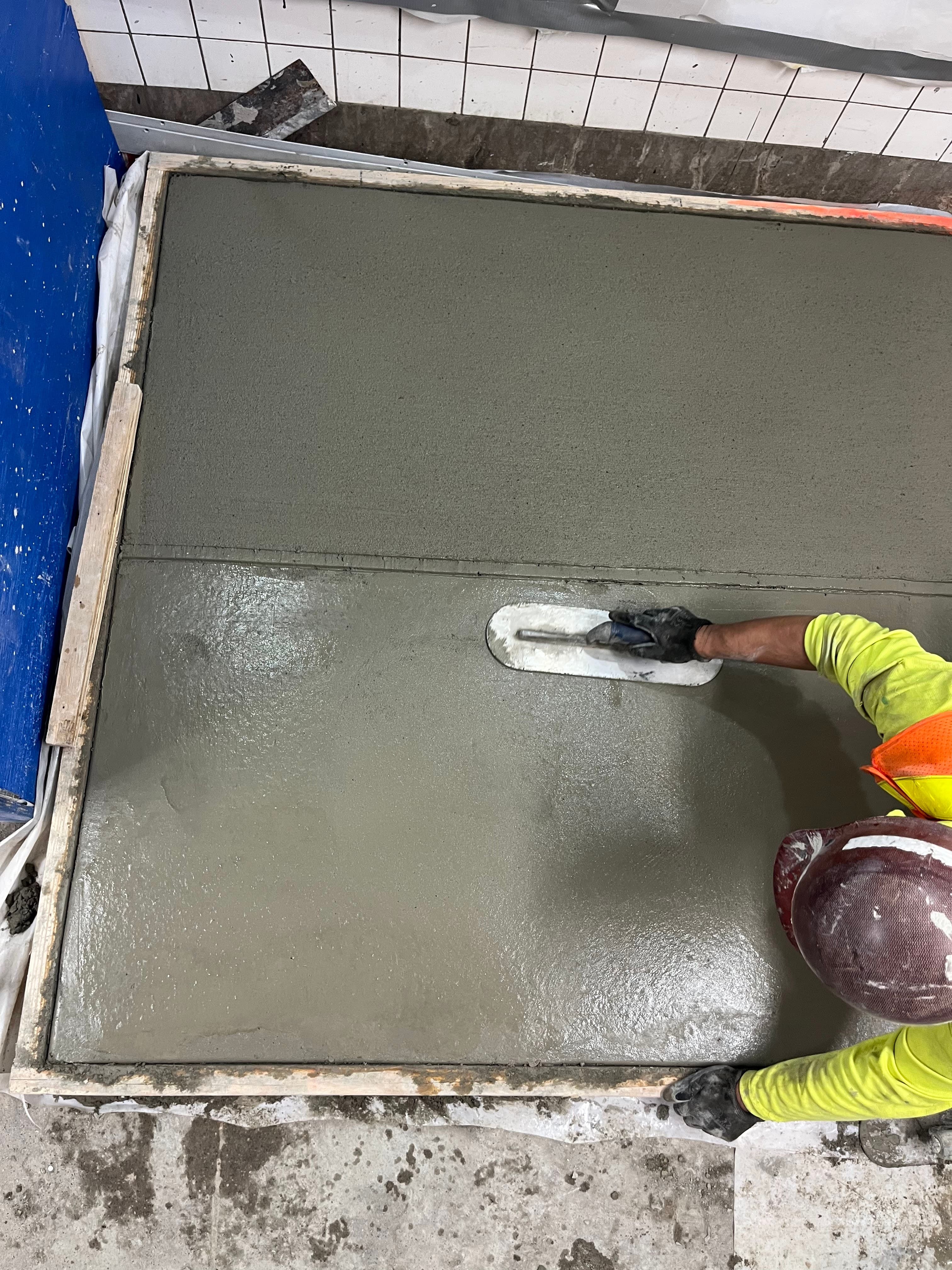
Featured image: NYC construction worker (2005). © Jorge Royan / royan.com.ar, via Wikimedia Commons, CC BY-SA 3.0. Used unmodified.
Comments
0 commentsChecking your Nexus session…
Loading comments…