Public construction built this city, and it is still one of the most reliable ways to build a career in it. Every school the School Construction Authority renovates, every station the MTA upgrades, every building the Department of Design and Construction delivers is put in place by a workforce that reaches from the laborer on the sidewalk shed to the project manager reading the drawings in the trailer.
If you want into that world and don't know where to start, this guide lays out the honest paths in — what the work is, the two broad career tracks, how to enter with no experience, and the credentials you'll need before you can set foot on a job site.
Why public construction is a career worth having
Public work has qualities that private jobs often don't. The projects are large and funded through multi-year capital plans, so the pipeline of work tends to be steadier than the boom-and-bust of private development. Most public construction in New York is prevailing-wage work, which means wages and benefits for covered trades are set by schedule rather than left to negotiation — the compensation is transparent and, for many roles, strong. And the range of work is enormous: a single public portfolio can include new schools, roof and façade replacements, HVAC and electrical upgrades, flood mitigation, and full accessibility retrofits.
That variety matters when you're starting out, because it means there are many doors in — not one.
The two tracks: the trades and the office
Construction careers split into two broad tracks. You can enter either one without a four-year degree, and people move between them over a career.
The trades (the field). This is hands-on work: carpenters, electricians, plumbers, ironworkers, masons, operating engineers (who run cranes and heavy equipment), painters, and general laborers. You learn a craft, earn while you learn, and can progress to foreman, general foreman, and superintendent.
The office (management and support). This is the side that plans, prices, schedules, and administers the work: estimators, project managers, project engineers, schedulers, safety managers, and quality-control staff. It rewards organization, communication, and comfort with drawings, specifications, and numbers.
Neither track is "better." The field builds the deepest understanding of how things actually go together; the office builds the systems that keep a project on time and on budget. The strongest people in this industry understand both.
How to get in with no experience
There are three realistic entry points if you're starting from zero.
1. Registered apprenticeship — "earn while you learn"
A registered apprenticeship is the classic path into the trades. You are hired and paid while you complete a structured combination of on-the-job training and classroom instruction, with your wage stepping up as you advance. In New York, apprenticeship programs are registered with the New York State Department of Labor, and many are run jointly by unions and contractor associations affiliated with the building trades.
Apprenticeship matters on public work specifically: prevailing-wage jobs allow apprentices to be paid apprentice rates only if they are enrolled in a registered program, so contractors actively value registered apprentices. (Verify the current registered-apprenticeship requirements and sponsor list with NYSDOL before relying on specifics.)
2. Pre-apprenticeship programs
If you can't yet land an apprenticeship directly, pre-apprenticeship programs are built as the on-ramp. They teach the basics — jobsite safety, tools, math, and what to expect — and help place graduates into registered apprenticeships. New York City has several such programs aimed at connecting residents to union construction careers. (Confirm current program names, eligibility, and application windows before publishing — these change.)
3. Direct hire as a laborer or helper
You can also start by being hired directly onto a crew as a general laborer or trade helper, learning on the job and working toward an apprenticeship or journey-level position over time. This is often the fastest way onto a site if you have the required safety training in hand.
The cards and certifications you'll need first
Before you work on most New York City job sites, you need safety training — this is not optional and contractors will ask for it on day one.
- Site Safety Training (SST) card. Under NYC Local Law 196, workers on many construction sites must hold an SST card earned through a required number of training hours, with a higher requirement for supervisors. Approved training combines OSHA courses with additional specialized topics. (Verify the current SST hour requirements for workers and supervisors under Local Law 196 before publishing — the phase-in has changed over time.)
- OSHA training. OSHA 10 and OSHA 30 courses are common building blocks and are typically part of earning an SST card.
- Trade-specific credentials. Depending on the work, you may need additional certifications — for example scaffold, flagging, or equipment-operation cards.
Getting these in hand early makes you employable immediately, and it signals to a contractor that you take the work seriously.
Breaking in on the management side
If the office track is more your speed, the entry points look different but are just as open.
- Entry roles: project engineer, assistant project manager, junior estimator, field administrator, and scheduling coordinator are the common first jobs.
- What contractors look for: the ability to read a drawing set and a specification, basic understanding of the bid and contract process, organization, and clear written communication. Familiarity with estimating software, scheduling tools, and documentation systems is a strong advantage.
- How to build it: community-college and CUNY construction-management programs, OSHA and blueprint-reading courses, and internships with contractors or construction managers all build a credible starting résumé. Time in the field first — even a season as a laborer — makes an office candidate far more effective.
The office side is where a career in contract administration lives: managing submittals, requests for information, pay applications, schedules, and closeout. It is detail-driven, systems-driven work — and it is exactly the discipline that keeps public projects out of disputes.
How to stand out to a public-works contractor
Contractors bidding public work — the kind of firms MODRN supports every day — hire for reliability and documentation discipline as much as for raw skill. A few things consistently set candidates apart:
- Show up credentialed. Have your SST/OSHA cards ready. It removes the single biggest barrier to getting on site.
- Learn how public jobs run. Understanding that public work means prevailing wage, certified payroll, submittals, and inspections tells an employer you won't be surprised by the paperwork.
- Be coachable and consistent. On a public schedule, the worker who shows up on time and follows the plan is worth more than the flashy one who doesn't.
- Aim past your first job. Whether you start in the field or the office, treat the first role as the doorway, not the destination.
The bottom line
You do not need a four-year degree or family connections to build a career in New York's public construction industry. You need a way in — an apprenticeship, a pre-apprenticeship, or a first job as a helper — and the safety training to get on site. From there, the work itself, and the people who run it well, will teach you the rest.
MODRN is a construction management and contract administration firm that works alongside the contractors delivering New York's public projects. If you're a firm looking to strengthen the systems behind your work — estimating, scheduling, submittals, compliance, and closeout — reach out to our team or see what we do.
This article is provided for general informational purposes. Program names, training-hour requirements, wage rules, and eligibility criteria change and vary by agency and trade; confirm current requirements with the relevant official source (NYS Department of Labor, NYC Department of Buildings, and the specific program) before acting on them.
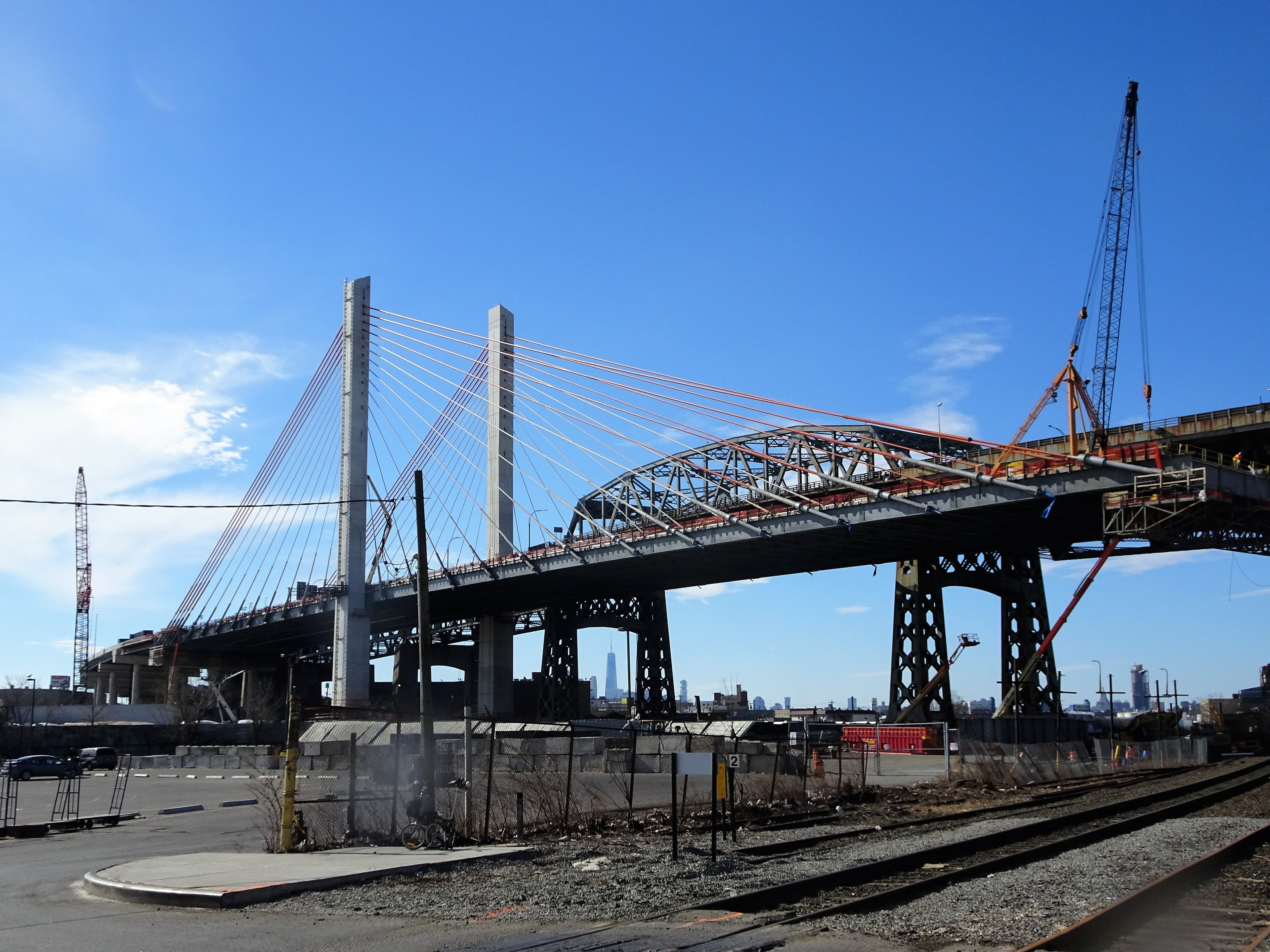
Featured image: The Kosciuszko Bridge replacement under construction, New York City (2017) — a major NYC public-infrastructure project of the kind new tradespeople and apprentices go on to work on. Photo by Jim.henderson via Wikimedia Commons, CC BY-SA 4.0. Used unmodified.
Comments
0 commentsChecking your Nexus session…
Loading comments…